Ship in Europe, Find out rates!
Language

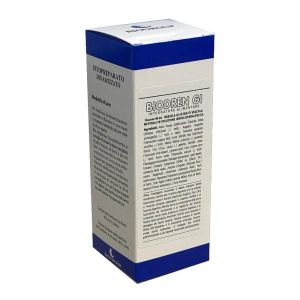
Biodren Gi Hydroalcoholic Solution 50ml Bottle
Regular Price
€19.50
Special Price
€19.03
-2%
Save: €0.47
In stock
Recent lowest price:
€18.53
Delivery 48/72h
Free returns
+80,000 products
Secure payments
Original products
Verified reviews


Draining of the Large Intestine Draining action on the large intestine: in case of malabsorption, food allergies and intolerances, intestinal dysbiosis, atopy, irritable colon, adjuvant in Crohn's disease, halitosis, mycosis, parasitosis.
Manufacturer
BIOGROUP SOCIETA' BENEFIT
SKU
907058174
Ingredients: Althaea officinalis L. Altea roots, Aloe barbadensis Mill. juice of the leaves Aloe vera, Angelica arcangelica L. Angelica roots, Ficus carica L. buds Fig, Foeniculum vulgare Mill. seeds Wild fennel, Vaccinium myrtillus L. fruits Bilberry, Vaccinium Vitis idaea L. new branches Cranberry, Carum carvi L. fruits Caraway, Pimpinella anisum L. fruits Green anise, Plantago lanceolata L. aerial parts Plantain lanceolata, Uncaria tomentosa Willd DC Uncaria root bark, Zingiber officinale Roscoe rhizomes and roots Ginger, Melaleuca alternifolia Cheel Tea Tree branches, Artemisia tridentata Californian flower Sagebrush, Impatiens Glandulifera Bach flower Impatiens, Malus sylvestris Bach flower Crab Apple, Prunus armeniaca French flower Apricot.
Warnings: do not exceed the recommended daily dose. The product is not intended as a substitute for a varied diet and should be used as part of a healthy and balanced lifestyle. Keep out of reach of children.
Pharmacological dynamics
Althaea officinalis L. Altea roots
The mucilages of which the plant is rich have an emollient and anti-inflammatory action on the intestinal mucosa. At this level, in fact, it has been shown that it has an adsorbing, soothing and antispastic effect on toxins. Its use is therefore useful in acute enterocolitis, irritable colon, ulcerative colitis, proctitis, etc.
Aloe barbadensis Mill. juice of the Aloe vera leaves
The juice is obtained by incising the superficial layers of the leaves. The active ingredient consists of aloin. It has a bitter-tonic, eupeptic, laxative and healing activity. In the colon, by removing the sugar and the action of the intestinal bacterial flora, there is a transformation of the active glycoside into an even more effective substance called aglycone, the main component of which is emodin.
The latter is transformed into antrone. Anthrons are very active in increasing peristalsis and mucus production. Due to an inhibition of the sodium-potassium activity at the level of the enterocytes, there is simultaneously a reduction in the reabsorption of water in the intestine, which produces an increase in the volume of the contents which in turn determines pressure against the wall and therefore stimulates peristalsis. Recent studies attribute to Aloe a marked action of strengthening the immune defenses, so considering that the latter is mainly present in the intestine with the MALT system, the importance of its use in this context can be inferred.
Angelica arcangelica L. Angelica roots
It has an antidispeptic and spasmolytic action on the digestive tract, especially in those forms that have a psychosomatic component at the base. The active principle is represented by angelicin, a furanocoumarin with a muscle relaxant and sedative action. It has no toxic effects, except a photosensitizing effect but at relevant dosages.
Ficus carica L. buds Fig
This Gemmotherapic, thanks to its active ingredients, has a marked regulating action of gastroduodenal secretion and motility and of the digestive tract in general, thus carrying out a marked antidistonic effect.
Foeniculum vulgare Mill. Wild fennel seeds
It grows in uncultivated places and arid areas of central and southern Europe, northern Africa, western Asia but widely cultivated all over the world. Fennel seeds have always been used in dyspeptic disorders, meteorism and spasms of the gastrointestinal tract. It also has an antiseptic action.
The essential constituents are represented by trans-anethole, phencone, estragon, limonene, etc.
Vaccinium myrtillus L. fruits Bilberry
The dried fruit, thanks to the presence of tannin, has an astringent, anti-microbial and adsorbing function in diarrheal forms, particularly in children and the elderly.
The fruits contain substances, called anti-adhesives, which inhibit the adhesion of the colibacillus to the walls of the bladder and intestine, for which its use in the treatment of enteritis is confirmed. Another important use is in spastic colitis and during antibiotic treatments. Fresh fruits have a laxative action in constipation. The presence of tannins ensures an antiviral activity.
Vaccinium Vitis idaea L. new branches Cranberry
The active ingredients are represented by arbutin, which acts in the urinary tract, and neomirtillina, with hypoglycemic properties. The young shoots of the plant, on the other hand, provide useful substances for colon disorders. They have a stimulating action in the case of an atonic bowel, as well as a sedative and antispastic action in the case of irritable and hypertonic colon. The remedy will therefore be active
both on constipation and on the spastic colon, meteorism, diarrhea, etc. It also performs a disinfectant action, especially on colibacilli, and significantly improves the trophism of the intestinal mucosa.
Carum carvi L. Carvi fruits
Belonging to the Apiaceae family, it is a biennial herbaceous plant characterized by a large fleshy root, an unbranched stem, petiolate basal leaves with a triangular-elongated outline. Its flowers consist of five white or pinkish petals. The drug is represented by the fruits. The active ingredients of the plant are as follows: 3-7% of essential oil, 12-25% of fatty oil with 3% of petroselic acid, 40% of oleic acid and 31% of linoleic acid; flavonoids.
It is aromatic, carminative and antimicrobial. It promotes digestion, fights intestinal atony, meteorism, flatulence, consequently the colitis-like manifestations. It has weak spasmolytic activity.
Pimpinella anisum L. fruits Green anise
It belongs to the Apiaceae family and is native to Egypt and Greece but is currently cultivated everywhere. The drug consists of fruits. The active ingredients of Anise are as follows: from 1.5 to 6% of essential oil including cis-etrans-anethole (70-90%), estragole, phenols, terpenes and sesquiterpenes; anisic aldehyde, coumarins and flavonoids. It has an exciting action on peristalsis in cases of intestinal atony; at the same time it has an antispastic and antiseptic effect.
For this reason it is useful for improving digestive functions, as an antispasmodic, for aerophagia and flatulence.
Plantago lanceolata L. aerial parts Plantain lanceolata
Common herbaceous plant found in meadows and along country roads. The active ingredients are represented by iridoidic glycosides including aucubin, flavonoids, mucilage, silicic acid, mineral salts, chlorogenic and neochlorogenic acid. The iridoids present in the plant are responsible for the anti-inflammatory, antimicrobial and anti-allergic activity. This action is mainly carried out by the aucubin.
No toxic effects are reported in the literature.
Uncaria Tomentosa Willd DC Uncaria root bark
It is a plant that grows in the tropical forests of South America. Peruvian curanderos use it a lot to heal deep wounds, ulcerations, degenerative pathologies, inflammations, etc. The alkaloids contained in it, in fact, perform a marked immunostimulating and modulating action. They seem to counteract the action of DNA-polymerase and reverse transcriptase in viral replication. Antimutagenic activity has also been reported.
Zingiber officinale Roscoe rhizomes and roots Ginger
Ginger is native to southern Asia but widely cultivated in all tropical regions. The active ingredients are represented by gingerin, gingerol, gingerone, zingiberin, linalool, camphene, phellandrene, citral, cineol, borneol. The rhizome has always been used in India and China as a spice, and is also a widely used medicine in oriental medicine. In the intestine, thanks to its active ingredients, it increases the tone of the muscle wall by activating peristalsis. Gingerols, of which it is rich, have been shown to stimulate gastrointestinal motility on a par with metoclopramide.
Melaleuca alternifolia Cheel Tea Tree branches
It is an Australian tree about six meters tall. The essential oil extracted from it is now well known for its bactericidal, germicidal and antifungal action.
The enormous frequency of the occurrence of fungal forms in the intestine, mostly caused by poor nutrition, makes it, in our case, an important component of the preparation. It is free from toxicity and has no irritating action for the mucous membranes.
Artemisia tridentata Californian Sagebrush flower
It is suitable for people who identify with their success, with their wealth and who lose sight of the values of life. The flower helps to reconnect with oneself, to repress misleading habits and negative behavior patterns.
Impatiens Glandulifera Bach flower Impatiens
It is suitable for people whose rhythms are too fast compared to the surrounding environment. They are people who never rest, they work even at night; they are capable of carrying out a thousand tasks at the same time. The flower, therefore, helps to slow down the mind, to have patience with those around us.
Malus sylvestris Bach flower Crab apple
It is the flower par excellence of purifications; it is therefore suitable for those who continually feel imperfect, unclean and not worthy of belonging to their society. They often have obsessive tendencies for excessive care and cleaning of themselves, of their home. The flower helps to restore the sense of purity, both physical and psychic.
Prunus armeniaca French flower Apricot
It is indicated in the treatment of inflammations and intoxications on a psychosomatic basis; helps purify and eliminate toxins.
| Destination | Cost | Detail |
|---|---|---|
| Italy | €5,00* | 72H |
| ZONE 1 | € 9,90* | 3 days |
| ZONE 2 | € 13,90* | 4 days |
| ZONE 3 | € 16,90* | 5 days |
| ZONE 4 | € 19,90* | 5 days |
| United Kingdom, Switzerland4 | € 30* | 7 days |
| Canada, USA | € 45 | 7 Days |
European shipments with express courier: FedEx, MBE, DHL
*For the shipment outside band B ther's an extra cost of 22€ *For the shipment outside band C ther's an extra cost of 30€ Delivery Times exclude Saturday and Holidays
For Islands and Areas of difficult Accessibility the shipments are made in 72 hours and the cost will be increased by 15€
The images of the products shown on our site are purely indicative and may differ in shape, color, text and packaging shown on them. Given the difficulty of updating all the products on our site in real time or any errors, XFarma.it, all products will be identified through SKU MINSAN (code of the Ministry of Health).