Ship in Europe, Find out rates!
Language

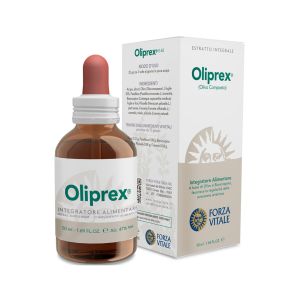
Ecosol Olivo Compound Supplement Drops 50 ml
€24.00
Out of stock
Delivery 48/72h
Free returns
+80,000 products
Secure payments
Original products
Verified reviews


Manufacturer
FORZA VITALE ITALIA
SKU
901398026
EAN
8023966200453
ECOSOL
OLIVE
COMPOUND Dietary supplement that acts favorably on the physiological well-being of the cardiovascular system.
Olive tree (Olea europaea)
From a clinical point of view, olive leaves can be used in forms of arterial hypertension of a modest degree, where they cause hypotension through a mechanism of peripheral vasodilation without causing depressant action on the heart. The fatty acids contained in the olive extract also reduce blood viscosity and facilitate diuresis. The hypotensor effect appears 20-30 minutes after administration and gradually increases until it causes the disappearance of the disorders due to the hypertensive state.
Passiflora (Passiflora incarnata)
This plant is often used in adults also for the treatment of cardiac erethism (palpitations and tachycardias of anxious subjects). In this it has a very similar use to Hawthorn, to which it is often associated for its activity on the myocardium.
Hawthorn (Crataegus oxyacantha)
At the cardiac level, it increases the blood supply to the myocardium and coronary arteries, resulting in a better tolerance to anoxia. The plant acts on the cardiovascular system on the one hand by dilating the musculature of the vessels, in particular the coronary ones, so by decreasing the peripheral resistance it determines a hypotensive action, on the other by acting directly on the myocardium with a positive inotropic action. Hawthorn manifests positive inotropic and negative chronotropic properties (strengthens and slows myocardial contractions), as well as positive domotropic (greater conductivity), negative batmotropic properties (greater excitability). In particular, the positive inotropic action would be attributable to the inhibition of c-AMP-phosphodiesterase.
Pilosella (Hieracium pilosella)
Diuretics have the function of increasing urinary excretion. The increase in urine flow causes there to be less "liquid mass" in the blood, and this decrease, creating a decrease in blood volume, causes the pressure to decrease. Pilosella is one of the plants with the greatest diuretic action due to the presence of umbelliferone. It acts directly at the level of the renal tubules, where it stimulates the excretion of water, sodium, chlorine and nitrogenous waste, without irritating the kidneys in any way.
Fumitory (Fumaria officinalis)
This plant is almost always used for its effectiveness in the therapy of hepatobiliary diseases. However, it is interesting to note that Fumaria in association with Pilosella and Hawthorn also acts at the level of the myocardium, helping to control the alteration of heartbeats with alternating tachycardia and bradycardia caused by nervous system lability.
Ingrediants
How to use
Recommended dosage for people of normal weight.
- Adults: 25 drops 3 times a day in a little water, before meals.
- Up to 12 years: 10 drops 3 times a day in a little water or fruit juice, before meals.
Warnings
For pregnant or lactating women it is recommended to seek medical advice.
Do not exceed the recommended daily dose.
Keep out of the reach of children under 3 years of age.
Supplements are not intended as a substitute for a varied diet.
It is not a medicinal product. The traditional use or clinical use of the substances listed should not be construed as a medical prescription. The ingredients contained are not intended to prevent or cure any disease.
Regulatory references
Food supplement (Legislative Decree No. 169 of 21 May 2004): compliant.
Food allergens (Directive 2003/89 / EC): absent.
Vitamins and minerals (EC Regulation N.1170 / 2009): compliant.
Food additives (EC Regulation N.1333 / 2008): compliant.
Format
50 ml (alcohol content 47% vol.).
Bibliography
- AV, PDR Nutritional supplements, CEC Edizioni, Milan 2003; Brigo B., Phytotherapy and gemmotherapy in clinical practice, La Grafica Briantea, Como 1991. Campanini E., Practical manual of gemmotherapy, New Techniques, Milan 1996. Campanini E., Dictionary of phytotherapy and medicinal plants, New Techniques, Milan 2004. Camporoese A., Essential oils and infectious diseases, Tecniche Nuove, Milan 1998. European Scientific Commission on Phytotherapy., Monographs on the medicinal use of plant drugs 1997. Rossi M., Tinture Madri in Phytotherapy, Studio Edizioni, Milan, 1992. Ross J., Combining western herbs and chinese medicine, Greenfield Press, Seattle 2003. Palamidessi T., The course of the atria and human diseases, Arkeios Editions, Rome 1990. Pizzorno J, Murray M., Joiner-Bey H., Clinical guide to natural medicine, New Techniques, Milan 2008. Bigo B., Trace elements and lithotherapy in clinical practice, New Techniques, Milan 1999. Camporese A., Essential oils and infectious diseases New Techniques, Milan 1998. Campanini E., Medical recipe book by fi torerapia, New Techniques, Milan 2000.
OLIVE
COMPOUND Dietary supplement that acts favorably on the physiological well-being of the cardiovascular system.
Olive tree (Olea europaea)
From a clinical point of view, olive leaves can be used in forms of arterial hypertension of a modest degree, where they cause hypotension through a mechanism of peripheral vasodilation without causing depressant action on the heart. The fatty acids contained in the olive extract also reduce blood viscosity and facilitate diuresis. The hypotensor effect appears 20-30 minutes after administration and gradually increases until it causes the disappearance of the disorders due to the hypertensive state.
Passiflora (Passiflora incarnata)
This plant is often used in adults also for the treatment of cardiac erethism (palpitations and tachycardias of anxious subjects). In this it has a very similar use to Hawthorn, to which it is often associated for its activity on the myocardium.
Hawthorn (Crataegus oxyacantha)
At the cardiac level, it increases the blood supply to the myocardium and coronary arteries, resulting in a better tolerance to anoxia. The plant acts on the cardiovascular system on the one hand by dilating the musculature of the vessels, in particular the coronary ones, so by decreasing the peripheral resistance it determines a hypotensive action, on the other by acting directly on the myocardium with a positive inotropic action. Hawthorn manifests positive inotropic and negative chronotropic properties (strengthens and slows myocardial contractions), as well as positive domotropic (greater conductivity), negative batmotropic properties (greater excitability). In particular, the positive inotropic action would be attributable to the inhibition of c-AMP-phosphodiesterase.
Pilosella (Hieracium pilosella)
Diuretics have the function of increasing urinary excretion. The increase in urine flow causes there to be less "liquid mass" in the blood, and this decrease, creating a decrease in blood volume, causes the pressure to decrease. Pilosella is one of the plants with the greatest diuretic action due to the presence of umbelliferone. It acts directly at the level of the renal tubules, where it stimulates the excretion of water, sodium, chlorine and nitrogenous waste, without irritating the kidneys in any way.
Fumitory (Fumaria officinalis)
This plant is almost always used for its effectiveness in the therapy of hepatobiliary diseases. However, it is interesting to note that Fumaria in association with Pilosella and Hawthorn also acts at the level of the myocardium, helping to control the alteration of heartbeats with alternating tachycardia and bradycardia caused by nervous system lability.
Ingrediants
| per daily dose equal to 2 ml | |
| Olive (Olea europaea) leaves 60% | 0.12 g |
| Passiflora (Passiflora incarnata) top | 0.08 g |
| Hawthorn (Crataegus oxyacantha) leaves and flowers | 0.08 g |
| Pilosella (Hieracium pilosella) aerial parts | 0.08 g |
| Fumitory (Fumaria officinalis) top | 0.04 g |
| Carnation (Eugenia caryophyllata) fruits | 12 µg |
| Echinacea (Echinacea angustifolia) root | 12 µg |
| Ginseng (Panax ginseng) root | 12 µg |
| Uncaria (Uncaria tomentosa) root | 12 µg |
| Sweet orange (Citrus sinensis) oily extract | 0.002 mcl |
| Cumin (Cuminum cyminum) oily extract | 0.002 mcl |
| Other ingredients: water; alcohol; honey; Iron-Vital; Gold-Vitale. | |
How to use
Recommended dosage for people of normal weight.
- Adults: 25 drops 3 times a day in a little water, before meals.
- Up to 12 years: 10 drops 3 times a day in a little water or fruit juice, before meals.
Warnings
For pregnant or lactating women it is recommended to seek medical advice.
Do not exceed the recommended daily dose.
Keep out of the reach of children under 3 years of age.
Supplements are not intended as a substitute for a varied diet.
It is not a medicinal product. The traditional use or clinical use of the substances listed should not be construed as a medical prescription. The ingredients contained are not intended to prevent or cure any disease.
Regulatory references
Food supplement (Legislative Decree No. 169 of 21 May 2004): compliant.
Food allergens (Directive 2003/89 / EC): absent.
Vitamins and minerals (EC Regulation N.1170 / 2009): compliant.
Food additives (EC Regulation N.1333 / 2008): compliant.
Format
50 ml (alcohol content 47% vol.).
Bibliography
- AV, PDR Nutritional supplements, CEC Edizioni, Milan 2003; Brigo B., Phytotherapy and gemmotherapy in clinical practice, La Grafica Briantea, Como 1991. Campanini E., Practical manual of gemmotherapy, New Techniques, Milan 1996. Campanini E., Dictionary of phytotherapy and medicinal plants, New Techniques, Milan 2004. Camporoese A., Essential oils and infectious diseases, Tecniche Nuove, Milan 1998. European Scientific Commission on Phytotherapy., Monographs on the medicinal use of plant drugs 1997. Rossi M., Tinture Madri in Phytotherapy, Studio Edizioni, Milan, 1992. Ross J., Combining western herbs and chinese medicine, Greenfield Press, Seattle 2003. Palamidessi T., The course of the atria and human diseases, Arkeios Editions, Rome 1990. Pizzorno J, Murray M., Joiner-Bey H., Clinical guide to natural medicine, New Techniques, Milan 2008. Bigo B., Trace elements and lithotherapy in clinical practice, New Techniques, Milan 1999. Camporese A., Essential oils and infectious diseases New Techniques, Milan 1998. Campanini E., Medical recipe book by fi torerapia, New Techniques, Milan 2000.
| Destination | Cost | Detail |
|---|---|---|
| Italy | €5,00* | 72H |
| ZONE 1 | € 9,90* | 3 days |
| ZONE 2 | € 13,90* | 4 days |
| ZONE 3 | € 16,90* | 5 days |
| ZONE 4 | € 19,90* | 5 days |
| United Kingdom, Switzerland4 | € 30* | 7 days |
| Canada, USA | € 45 | 7 Days |
European shipments with express courier: FedEx, MBE, DHL
*For the shipment outside band B ther's an extra cost of 22€ *For the shipment outside band C ther's an extra cost of 30€ Delivery Times exclude Saturday and Holidays
For Islands and Areas of difficult Accessibility the shipments are made in 72 hours and the cost will be increased by 15€
The images of the products shown on our site are purely indicative and may differ in shape, color, text and packaging shown on them. Given the difficulty of updating all the products on our site in real time or any errors, XFarma.it, all products will be identified through SKU MINSAN (code of the Ministry of Health).